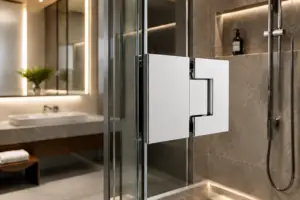
Selecting high-quality frameless shower hinges can make or break your commercial bathroom projects. Every week, a buyer or glazing contractor comes to me with the exact same problem: “Our frameless shower doors are sagging, and the hinges are showing rust spots after just one year in the hotel.” Usually, they blame the glass weight or the installer. But 90% of the time, I look at the broken hinge they send me and see the real culprit: the wrong base metal.
When you are sourcing hardware from China, the price quotes you receive can vary wildly. That price difference almost always comes down to the raw material. If you specify the wrong metal for your frameless shower hinges on a heavy 8mm or 10mm glass door, you are guaranteeing field failures.
As a factory manager who machines these parts every day at Maxima, here is the honest truth about Zinc Alloy, Stainless Steel, and Solid Brass—and how to choose the right one for your projects.
1. Zinc Alloy: The Budget Disguise
Zinc alloy is very common in the budget hardware market. It has a low melting point, which means factories can easily melt it down and shoot it into a mold (die-casting). It is fast and cheap to produce.
But for wet, heavy-duty environments like a shower enclosure, zinc is a massive risk for B2B buyers.
- The Problem with Strength: Zinc is brittle. Under the constant dynamic load of a heavy swinging glass door, the structural integrity of your frameless shower hinges weakens. This is the number one cause of “door sag” over time.
- The Problem with Moisture: If the surface plating gets even a microscopic scratch, moisture penetrates the zinc base. The metal will oxidize, bubble, and cause the chrome or black finish to peel off.
Factory Verdict: If you are selling to high-end European hotels or premium residential developers, avoid zinc alloy frameless shower hinges completely. The money you save on purchasing will be lost on warranty claims.

2. Stainless Steel (304 & 316): The Rust Fighter
Stainless steel is a fantastic, highly durable metal. For shower hardware, reliable factories will use either SUS304 or marine-grade SUS316.
- The Strengths: It offers incredible corrosion resistance. Because it is a hard metal, it holds up exceptionally well to the weight of thick glass without warping.
- The Weaknesses: Stainless steel is notoriously hard to machine. Because it wears down CNC tooling quickly, stainless steel hinges often feature simpler, blockier, and more industrial designs. Furthermore, while it can be polished to a mirror finish, it does not hold certain electroplated finishes as flawlessly as brass does.
Factory Verdict: Excellent for outdoor showers, coastal projects, or commercial gyms. If your priority is absolute rust prevention and you prefer a brushed or minimalist look, stainless steel is a safe, professional choice.
3. Solid Brass: The Industry Gold Standard
If you walk into a luxury hotel in London or a high-end apartment in Munich, the frameless shower hinges are almost certainly made of solid brass. At Maxima, manufacturing solid brass frameless shower hinges is our core specialty.
Brass is an alloy of copper and zinc, offering the perfect balance of tensile strength and machinability.
- Flawless Plating: Brass is the absolute best base metal for surface finishing. Whether you need a highly reflective Polished Chrome, a smooth Matte Black, or a trendy Brushed Gold, electroplating bonds to brass beautifully. It creates a smooth, flawless surface that easily passes strict salt-spray testing.
- Heavy-Duty Performance: Drop-forged and precision CNC-machined brass hinges can safely carry heavy, oversized glass panels without the clamping grip loosening over time.
Factory Verdict: Solid brass is the professional’s choice. It is more expensive upfront, but it eliminates sagging, peeling, and pitting. It protects your brand’s reputation.
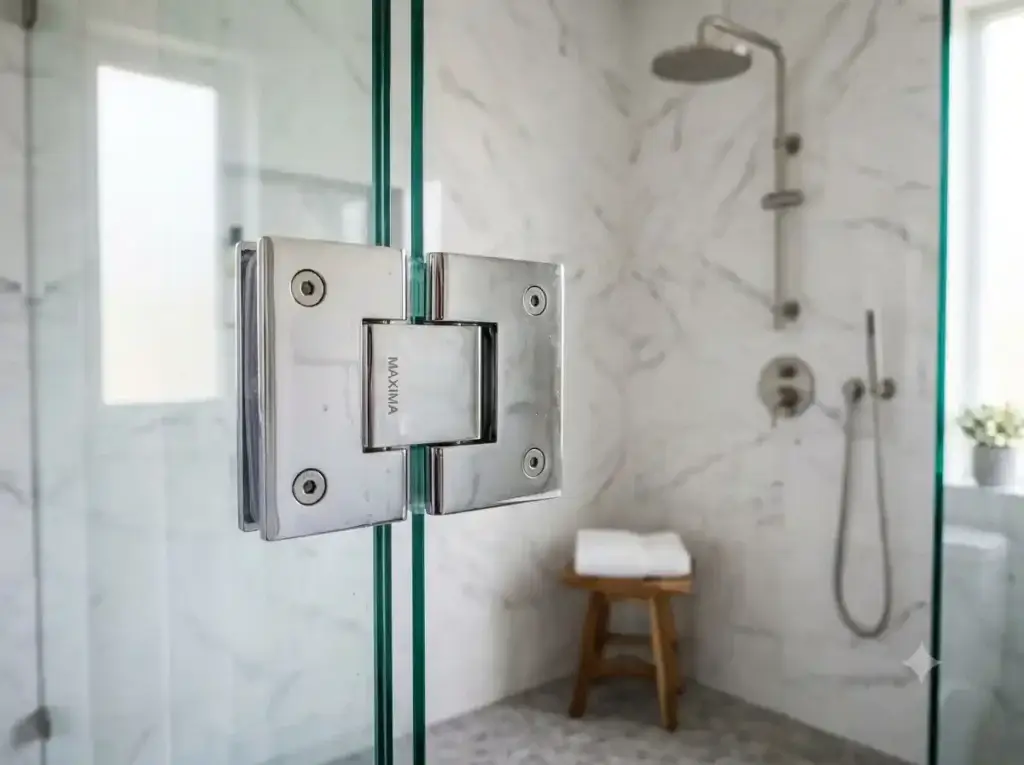
Quick Material Comparison for Frameless Shower Hinges
Here is how the three materials stack up for frameless shower hardware:
| Base Material | Corrosion Resistance | Finish Quality | Weight Capacity | Best Application |
|---|---|---|---|---|
| Zinc Alloy | Low | Fair | Low | Budget residential |
| Stainless Steel | High | Good | High | Coastal or industrial |
| Solid Brass | Very High | Excellent | Very High | Premium projects |
Factory Secrets: How to Tell What You Are Actually Buying
Unfortunately, some unethical suppliers will quote you for brass but quietly ship you zinc alloy to increase their margins. Once it is plated in chrome, they look identical to the naked eye.
Here is how you can inspect your samples to protect yourself:
- The Weight Test: Solid brass is significantly denser and heavier than zinc. A standard heavy-duty brass hinge should feel substantial in your hand. If it feels suspiciously light, question the material.
- The Scratch Test: Take a sharp tool and scratch the inside of the frameless shower hinge plate (where it clamps to the glass and won’t be seen). If the metal underneath the plating is a silvery-gray, it is likely zinc. If it shows a yellowish-gold tint, it is genuine brass.
- Check the Tolerances: Zinc parts are cast, often leaving tiny mold lines or slightly uneven edges. Premium brass parts are CNC machined, resulting in razor-sharp, perfectly straight edges with zero dimensional deviation.

Don’t Compromise on the Core
Your shower enclosure system is only as strong as its weakest hinge. If you are a glazing contractor or a hardware distributor, sourcing the right material is the first step to securing repeat business.
At Maxima, we don’t cut corners with cheap alloys. We rely on solid brass and precision CNC machining to produce heavy-duty frameless shower hinges that handle the load and survive the wet environment.
If you are looking for reliable, heavy-duty components for your next project, explore our full catalog of solid brass shower door hinges and see the difference real manufacturing makes.