Quick Answer
OEM shower hardware manufacturing allows bathroom brands, distributors, contractors, and project suppliers to develop customized products based on their own market requirements. A professional OEM process usually includes requirement confirmation, engineering review, prototype development, sample approval, mass production, quality inspection, and shipment.
Understanding each manufacturing stage helps buyers communicate more effectively with suppliers, reduce production risks, and achieve more reliable product quality.
Introduction
Many buyers sourcing shower hardware from China are looking for more than standard products.
Bathroom brands, shower enclosure manufacturers, and project suppliers often need customized solutions to meet different market requirements, installation conditions, and customer expectations.
Common customization requirements include:
- Unique product designs
- Custom dimensions
- Special surface finishes
- Private label packaging
- Hardware solutions for specific glass systems
However, developing customized shower hardware is not simply about sending a drawing to a factory.
A successful OEM project requires cooperation between buyers and manufacturers throughout the entire process. Without clear communication and proper planning, buyers may face problems such as design changes, unexpected costs, quality issues, and delayed delivery.
This guide explains the complete OEM shower hardware manufacturing process, helping buyers understand how a product moves from an initial concept to final production.
What Is OEM Shower Hardware Manufacturing?
OEM (Original Equipment Manufacturing) means a manufacturer produces products according to a buyer’s specific requirements.
Unlike purchasing standard products, OEM manufacturing allows companies to customize products according to their own brand positioning, customer needs, and project requirements.
Common OEM shower hardware products include:
- Shower door hinges
- Glass clamps
- Shower door handles
- Shower door connectors
- Support bar fittings
- Bathroom hardware accessories
Working with an experienced shower door hardware manufacturer allows buyers to develop products with better control over design, quality, and production consistency.
OEM manufacturing is especially useful for companies that want to:
- Create their own product series
- Improve market differentiation
- Meet special project requirements
- Build long-term supply relationships
Why Do Buyers Choose OEM Shower Hardware?
Different markets often have different expectations for shower hardware.
A product suitable for one region or project may not always meet the requirements of another.
OEM manufacturing helps buyers solve these differences.
1. Product Differentiation
Many bathroom brands want products that are different from competitors.
OEM allows buyers to customize:
- Product appearance
- Structural design
- Surface treatment
- Packaging style
This helps companies create products that better match their brand identity.
2. Project-Specific Requirements
Large projects such as:
- Hotels
- Apartments
- Commercial buildings
- Luxury residences
may require specific hardware solutions.
For example, a project may require:
- Special finishes
- Specific installation methods
- Matching accessories
- Customized dimensions
OEM manufacturing allows suppliers to adjust products according to real project conditions.
3. Better Supply Control
Working directly with a professional manufacturer can help buyers improve control over:
- Product quality
- Production schedules
- Product improvements
- Long-term supply stability
Before starting cooperation, buyers can also review this guide about how to select a reliable shower hardware supplier.
Step 1: Confirm Product Requirements
Every OEM project begins with clear requirements.
Before contacting a manufacturer, buyers should prepare detailed product information.
Important information includes:
- Product application
- Glass thickness
- Installation method
- Material requirements
- Surface finish
- Expected quantity
- Target market
For example, shower hardware used in a luxury hotel project may require different specifications compared with residential bathroom products.
Clear requirements help manufacturers evaluate the project and provide more suitable recommendations.
A detailed shower hardware RFQ can also help buyers communicate product expectations more efficiently.
Step 2: Engineering Review and Design Evaluation
After receiving customer requirements, manufacturers usually perform an engineering review.
This stage determines whether the product design can be produced successfully.
Engineers typically evaluate:
- Product structure
- Material selection
- Manufacturing methods
- Assembly process
- Installation performance
For example, when developing a shower hinge, engineers need to consider:
- Glass weight support
- Opening and closing performance
- Long-term durability
- Installation safety
A design may look suitable on paper, but professional engineering evaluation helps identify potential production problems before manufacturing begins.
Early problem identification can reduce unnecessary modifications and improve project efficiency.
Step 3: Prototype Development and Sample Approval
Prototype development is one of the most important stages in OEM manufacturing.
A prototype allows buyers to evaluate the actual product before mass production.
During sample evaluation, buyers should check:
- Product appearance
- Dimensions
- Function
- Installation compatibility
- Surface quality
For shower hardware products, practical testing is especially important.
For example, a shower hinge sample should be tested with the actual glass thickness and installation method to confirm:
- Smooth operation
- Stable performance
- Proper fitting
Approving samples before production helps both buyers and manufacturers avoid costly mistakes.
Step 4: Material Selection and Manufacturing
Material selection directly affects product durability, appearance, and service life.
Common materials used in shower hardware include:
- Stainless steel
- Brass
- Metal alloys
Different projects may require different material choices.
For example:
- Residential projects may focus on cost efficiency.
- Hotels and coastal projects may require stronger corrosion resistance.
Buyers can learn more about stainless steel properties through the stainless steel information provided by the World Stainless Association.
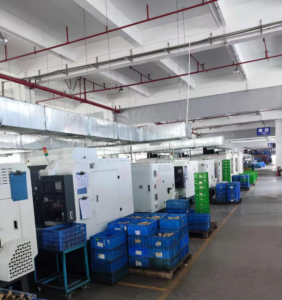
During manufacturing, suppliers may use processes including:
- CNC machining
- Cutting
- Grinding
- Polishing
- Surface treatment
- Assembly
Each manufacturing step influences the final product quality and consistency.
Step 5: Quality Inspection Before Shipment
Quality control is one of the most important parts of OEM shower hardware manufacturing.
A reliable supplier should not only inspect finished products but also control quality throughout the production process.
Common inspection procedures include:
Appearance Inspection
Manufacturers usually check:
- Surface scratches
- Uneven polishing
- Finish consistency
- Color differences
- Visible defects
This is especially important for decorative shower hardware because the final appearance directly affects the customer experience.
Dimension Inspection
Precision is important for shower hardware because products must match glass panels and installation systems.
Inspection may include:
- Product dimensions
- Hole positions
- Component accuracy
- Assembly compatibility
Accurate dimensions help prevent installation problems during real projects.
Function Testing
Before shipment, manufacturers should verify product performance.
Testing may include:
- Opening and closing movement
- Hinge stability
- Connection strength
- Installation performance
For example, shower hinges should maintain smooth operation while supporting the expected glass weight.
Buyers should discuss quality requirements with suppliers before production begins. International quality management principles can also be referenced through international quality standards.
Step 6: Packaging and Shipment
After production and inspection are completed, products move to packaging and shipment.
For international buyers, packaging is an important part of the supply process.
Shower hardware products often have polished or decorative surfaces, which require proper protection during transportation.
Professional packaging helps prevent:
- Surface scratches
- Product damage
- Missing components
- Transportation problems
Before shipment, buyers should confirm:
- Packaging requirements
- Product labels
- Shipping documents
- Delivery schedule
A complete OEM service should support buyers from product development to final delivery.
How Buyers Can Make OEM Shower Hardware Projects More Successful
A successful OEM project depends on cooperation between buyers and manufacturers.
Buyers can improve project efficiency by preparing information before contacting suppliers.
Provide Clear Product Requirements
Detailed information helps manufacturers understand the expected product.
Important details include:
- Product drawings
- Material requirements
- Surface finish
- Quantity
- Application conditions
Clear communication reduces unnecessary modifications during development.
Prepare Samples or Technical References
If buyers already have existing products, drawings, or samples, sharing these references can help manufacturers understand expectations more accurately.
This is especially useful when developing customized shower hinges, clamps, or connectors.
Confirm Quality Requirements Early
Quality expectations should be discussed before mass production.
Buyers should confirm:
- Material standards
- Surface requirements
- Inspection methods
- Packaging requirements
Early confirmation helps avoid disagreements after production starts.
Select a Manufacturer With OEM Experience
Not every supplier has the same manufacturing capability.
When choosing a supplier, buyers should consider:
- Production experience
- Engineering capability
- Quality control process
- Communication efficiency
A manufacturer with experience in OEM projects can provide better support during product development.
Buyers can also review this guide about how to choose a reliable shower hardware supplier before starting cooperation.
Common Mistakes in OEM Shower Hardware Projects
Starting Production Without Sample Approval
One common mistake is moving directly into mass production without confirming samples.
This may result in:
- Incorrect product details
- Installation problems
- Additional modification costs
Sample approval provides both buyers and manufacturers with a clear production reference.
Choosing Suppliers Only Based on Price
Price is an important factor, but it should not be the only consideration.
A lower quotation may sometimes lead to:
- Lower material quality
- Limited customization ability
- Poor communication
- Higher future costs
Buyers should evaluate the overall value, including production capability and long-term cooperation potential.
Providing Incomplete Product Information
Incomplete requirements may cause:
- Design changes
- Production delays
- Incorrect quotations
Providing detailed information at the beginning helps manufacturers provide more accurate solutions.
FAQ
What is OEM shower hardware manufacturing?
OEM shower hardware manufacturing means a manufacturer produces customized shower hardware according to a buyer’s requirements, including product design, materials, finishes, dimensions, and packaging.
Can shower hardware manufacturers customize products?
Yes. Professional manufacturers can usually support customized designs, product structures, surface finishes, packaging, and production solutions based on customer requirements.
How long does an OEM shower hardware project take?
The timeline depends on product complexity, customization requirements, sample approval process, and production quantity.
Standard modifications may require less time, while completely new product development usually requires additional engineering and testing.
What information should buyers prepare before an OEM project?
Buyers should prepare:
- Product drawings or samples
- Application requirements
- Material specifications
- Surface finish requirements
- Quantity expectations
- Quality standards
Detailed information helps manufacturers provide better solutions.
Final Thoughts
OEM shower hardware manufacturing is a collaborative process between buyers and manufacturers.
From requirement confirmation and engineering review to prototype development, quality inspection, and shipment, each stage affects the final product quality.
For international buyers, understanding the manufacturing process helps reduce risks, improve communication, and make better sourcing decisions.
Choosing the right manufacturing partner is not only about purchasing products. It is about building a reliable supply relationship that supports long-term business development.