

Introduction: The Hidden Cost of Sagging Shower Doors for B2B Buyers
MAXIMA Hardware is a bathroom hardware factory. I have worked in OEM manufacturing and B2B supply chain management for many years. I handle product development, factory coordination, and international customer relations every single day.
In my daily work, international buyers often ask me a critical question. They ask why frameless shower hinges sag after a few months of use. A sagging shower door is a major headache for B2B buyers, importers, and contractors. A sagging glass door creates loud dragging noises. The glass edge rubs against the bathroom floor or the side wall. In bad cases, the glass door can catch on the tile floor and shatter completely.
This problem causes expensive customer complaints, costly product returns, and severe damage to your brand reputation. When you sell bathroom hardware, you want your customers to trust your products. In this article, I will explain why frameless shower hinges sag over time. I will share the real engineering root causes from a factory perspective. I will also explain how professional manufacturers solve this issue during production.
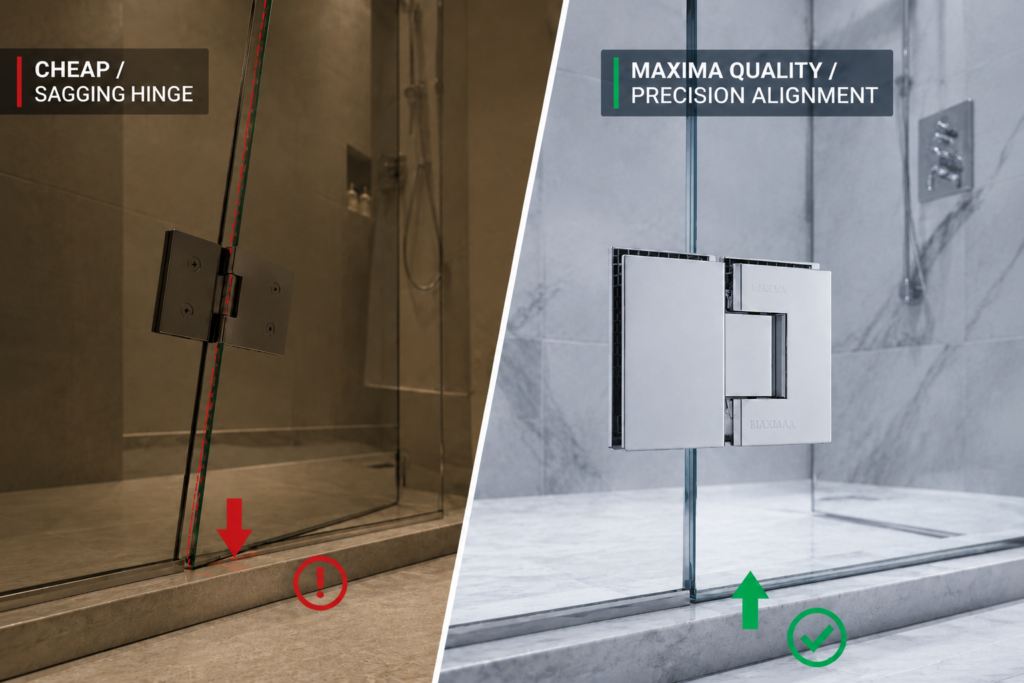
What Causes Frameless Shower Hinges to Sag?
A frameless glass shower door is very heavy. Most glass panels weigh between 30 and 50 kilograms. The hinges must support this heavy load for many years. When a shower hinge sags, the failure usually comes from specific manufacturing flaws. Here are the five main reasons why frameless shower hinges sag.
1. Weak Internal Springs and Poor Heat Treatment
Inside every self-closing shower hinge, you will find internal springs. These springs push the hinge back to the zero-degree closed position. Cheap factories often use low-cost steel springs. They skip proper heat treatment processes to save money.
Heat treatment gives the steel spring its elasticity and mechanical memory. When a spring lacks proper heat treatment, the spring loses tension very fast. After a few hundred open-and-close cycles, the spring cannot pull the heavy glass back. The hinge becomes soft and loose. As a result, the glass door sags downward under its own weight.
2. Low-Density Metal Casting and Weak Clamp Plates
The outer body and clamp plates of the hinge hold the heavy glass panel in place. Some factories use low-grade recycled brass. Other factories use cheap zinc alloys or thin hollow stainless steel covers.
These cheap metals have low density and contain microscopic air bubbles inside. When you tighten the clamp screws during installation, weak metal clamp plates flex and bend slightly. Over time, the clamping pressure drops significantly. The metal body loses its strong grip on the glass. The heavy glass panel slowly slides downward through the clamp plates.
3. Low-Quality Gaskets and Incorrect Rubber Materials
You cannot place metal clamp plates directly against glass. You must place soft gaskets between the metal surface and the glass panel. Gaskets protect the glass from breaking and create essential friction.
Many budget manufacturers use cheap PVC sheets or hard plastic gaskets. Cheap gaskets dry out rapidly in warm and humid bathroom environments. They shrink and harden after exposure to hot water and moisture. When the gasket shrinks, the clamping pressure drops immediately. The glass door slips down because the gasket loses friction. High-quality factories use non-aging rubber or specialized clear gaskets that retain elasticity for years.
4. Loose Screws and Soft Screw Threads
A shower hinge relies on heavy-duty screws to pull the two clamp plates together. These screws must remain tight under continuous door movement and vibration.
Cheap factories cut low-quality threads inside the hinge body. They also supply soft iron or low-grade stainless steel screws. When users open and close the heavy shower door, the movement creates constant vibration. Soft screw threads strip or loosen under continuous pressure. Loose screws reduce clamping force on the glass panel. The hinge slips, and the door sags.
5. Incorrect Glass Cutout Tolerances and Installation Errors
Sometimes, the sag problem begins with improper glass cutouts or installation mistakes. Installers must cut the glass according to exact template drawings provided by the factory. If the glass cutout is too large or uneven, the hinge clamp plates have less surface area to grip.
Also, installers often make mistakes with screw torque. If an installer does not tighten the screws enough, the hinge slips quickly. If an installer tightens the screws too hard, the soft threads inside cheap hinges break immediately. Both errors lead to door sagging over time.
How Professional Factories Prevent Hinge Sagging
At MAXIMA Hardware, we know that preventing hinge sag is essential for long-term customer trust. We implement strict quality control standards throughout our manufacturing process. Here is how professional hardware factories produce non-sagging shower hinges.
1. We Use High-Density Forged Solid Brass and Precision CNC Machining
We do not use cheap recycled scrap metals or zinc castings for heavy doors. We use high-purity solid brass or high-grade 304 stainless steel. We use drop-forging machines to press raw metal under high pressure. Drop-forging removes internal air pockets and increases metal density.
After forging, we machine every hinge body using precision CNC equipment. Precision machining guarantees that the clamp plates remain completely flat. Flat clamp plates apply equal pressure across the entire glass surface. Equal pressure prevents glass slippage and eliminates door sagging.
2. We Select Premium 304 Stainless Steel Springs with Controlled Heat Treatment
We use premium 304 stainless steel wire for all our internal springs. We process every batch of springs through computer-controlled heat treatment ovens. This process locks in optimal spring elasticity and high fatigue resistance.
Our springs maintain strong tension even after 100,000 continuous opening cycles. We test spring tension before we assemble every hinge. We discard any spring that fails our strict tension parameters.
3. We Supply Premium Aging-Resistant Gaskets
We test our gasket materials in hot water baths and steam chambers. We select high-friction, aging-resistant clear gaskets.
Our gaskets resist heat, humidity, and cleaning chemicals. They do not harden, shrink, or crack over time. They maintain constant friction against the glass panel for many years.
4. We Perform Rigorous Cycle Testing and Load Capacity Tests
Before we release any hinge model for mass production, we perform severe stress tests in our laboratory. We install heavy 50-kilogram glass panels on the sample hinges.
We use automated mechanical arms to open and close the door 100,000 times continuously. We measure the door height before, during, and after the test. If the glass door sags by more than 0.5 millimeters, our engineering team redesigns the hinge structure. We only ship hinges that pass this rigorous cycle test.
How B2B Buyers Can Spot Reliable Shower Hinges Before Ordering
As a B2B buyer, you can prevent quality claims by inspecting supplier samples carefully before you place a large production order. Here are two practical tips from my factory experience.
Ask Your Supplier for Material Certifications and Test Reports
You should always request raw material test certificates from your supplier. A reliable manufacturer will share these lab documents willingly.
Check the Weight and Finish of Sample Hinges
You should request physical samples from different factories and compare them directly. You can hold the hinges in your hand. A forged solid brass hinge feels heavy and solid. A cheap hollow or zinc alloy hinge feels light and fragile.
You should inspect the screw holes carefully. High-quality hinges feature deep, clean, and smooth screw threads.
Test the Gaskets and Screws Carefully
You should examine the gaskets included in the package. You can bend the gasket between your fingers. A quality gasket feels flexible, smooth, and grippy. A cheap gasket feels stiff and slippery.
You should also check the clamping screws. Good factories supply high-grade 304 stainless steel screws with deep drive sockets that do not strip easily.
Conclusion
Frameless shower hinges sag because of weak materials, poor springs, low-quality gaskets, and sloppy manufacturing controls. When you buy cheap hardware and your frameless shower hinges sag to save a few dollars, you pay a heavy price later in customer complaints, warranty costs, and lost business.
At MAXIMA Hardware, we build high-performance shower hardware designed to last. We focus on high-density forged metals, heat-treated stainless steel springs, and strict factory testing. If you want to source reliable, non-sagging shower hinges for your brand or project, you can contact our team today.


